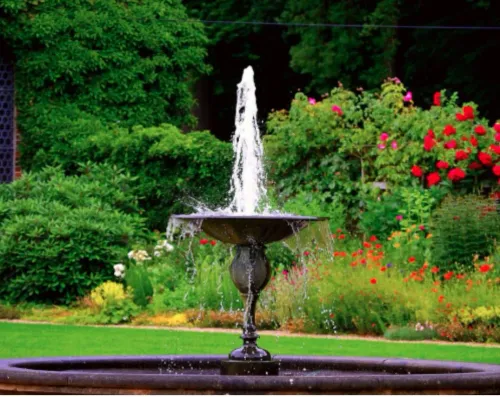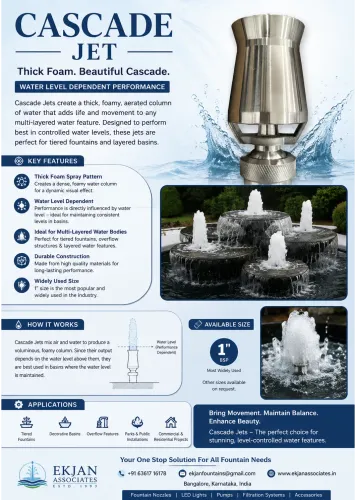
A water-dependent cascade jet fountain nozzle creates a mesmerizing display by mixing air with water to produce a foam-like effect. Here\'s a breakdown of its working mechanism and why a drum-like structure is beneficial:
How It Mixes Air with Water:
1. Nozzle Design:
- The nozzle typically features a venturi effect system where the shape narrows the water flow.
- As water is forced through this narrow passage, it creates a high-velocity jet that reduces the surrounding pressure.
2. Air Induction:
- The low pressure draws in air through specially designed openings around the nozzle.
- This air mixes with the water in the nozzle chamber, creating turbulence that results in a frothy, white, foam-like jet.
3. Uniform Stream:
- The nozzle ensures a balanced mix of air and water, producing a consistent and aesthetically pleasing effect.
---
Why a Drum-Like Structure is Advisable:
1. Stabilization:
- A drum-like structure surrounding the nozzle acts as a stabilizing chamber.
- It ensures the water entering the nozzle is at a steady pressure and flow rate, preventing turbulence or irregularities in the foam effect.
2. Debris Control:
- The drum can serve as a debris trap, filtering out particles that might clog the nozzle or disrupt the foam formation.
3. Enhanced Air-Water Mixing:
- The enclosed environment promotes optimal mixing by minimizing external disturbances, such as wind or uneven water supply.
4. Noise Reduction:
- The drum reduces the noise generated by the turbulent mixing of air and water, creating a more serene fountain display.
5. Water Level Management:
- The structure helps maintain a consistent water level around the nozzle, ensuring efficient air induction and uniform jet formation.
---
Practical Applications:
This setup is widely used in fountains designed for public spaces, parks, and decorative installations, where the dramatic foam effect adds visual appeal and a soothing sound of cascading water. The drum-like enclosure ensures reliable performance and durability of the nozzle system over time.