The Art of Concealed Basin Water Fountains: Beauty Meets Functionality
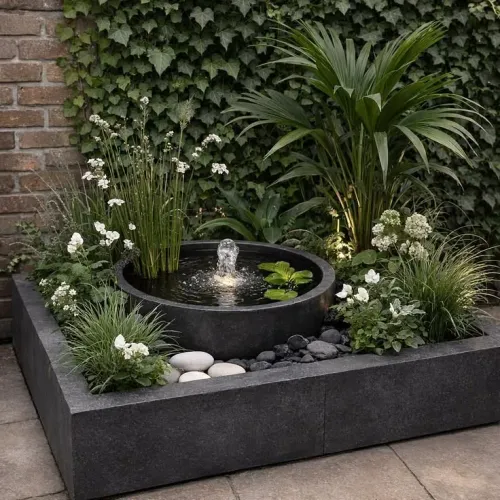
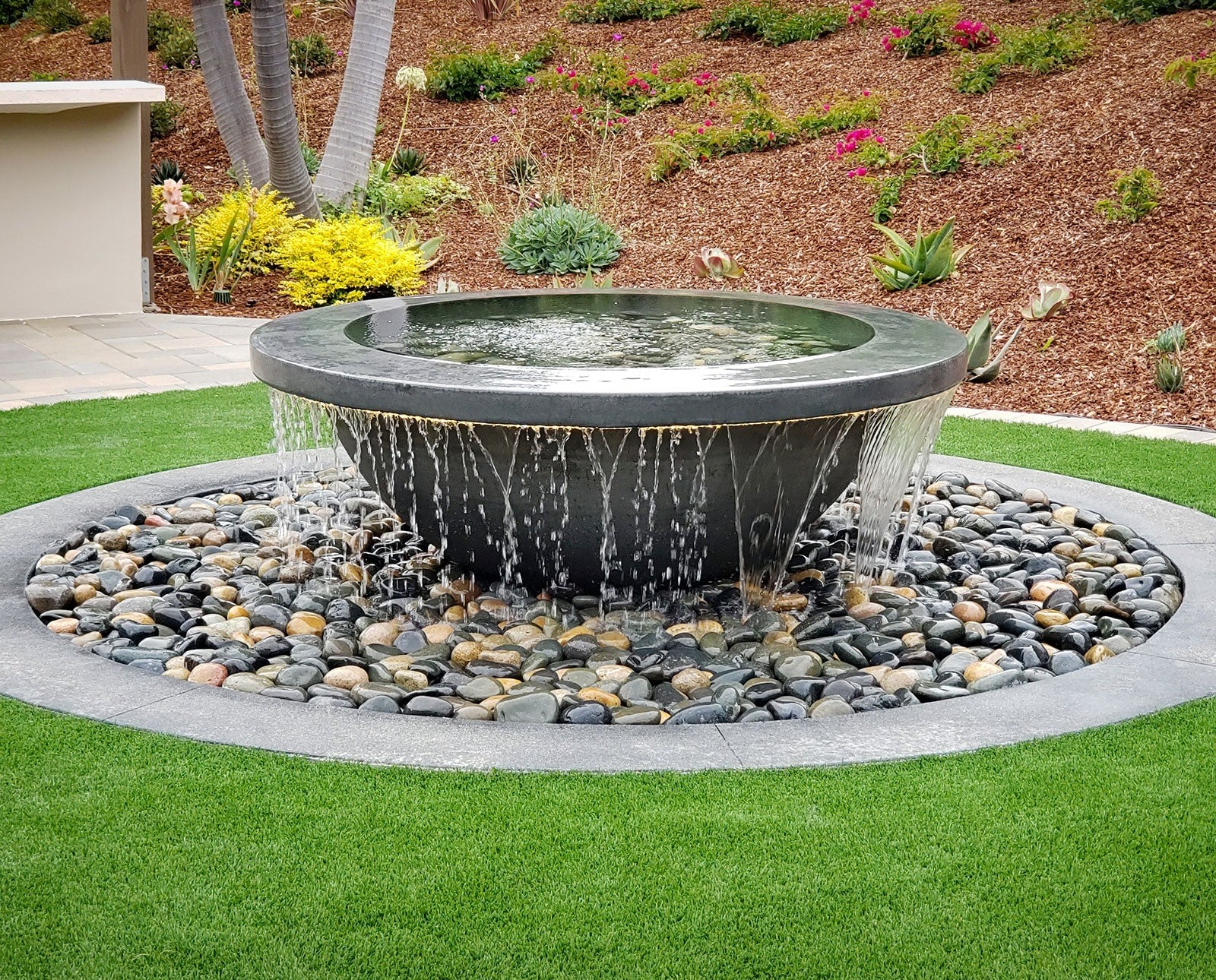
There's something mesmerizing about water that appears to vanish into thin air. Modern covered basin fountains have revolutionized outdoor water feature design by creating the illusion of water disappearing into decorative stones or landscaping, while the functional basin remains completely hidden beneath. This stunning design approach, exemplified by contemporary installations like the one pictured, represents the perfect marriage of aesthetic sophistication and practical engineering. At Ekjan Associates, we've seen firsthand how covered basin fountains have become the preferred choice for discerning homeowners seeking to add water features without the traditional pond appearance.
Understanding Covered Basin Fountain Design
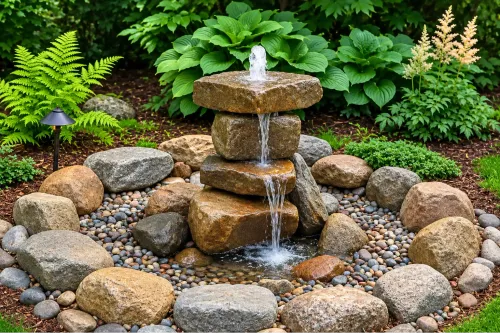
A covered basin fountain operates on a beautifully simple principle: water circulates from a central feature—in this case, a striking sculptural bowl with overflow edges—and falls onto a decorative surface of stones or pebbles. Beneath this visible layer lies a concealed basin that collects the water and houses a submersible pump that recirculates it back to the fountain top. The magic lies in what you don't see: the functional components remain completely hidden, leaving only the artistic elements visible.
This design transforms the traditional fountain concept. Instead of standing water in an open basin or pond, you experience the beauty of flowing water combined with the natural texture of stones, all while the mechanical elements work invisibly beneath the surface.
The Aesthetic Advantages of Covered Basins
Contemporary Clean Lines
Traditional fountains with exposed water basins, while beautiful, can sometimes feel dated or ornamental. Covered basin designs embrace contemporary minimalism by eliminating visual clutter. The eye focuses on the sculptural fountain element and the interplay of water with stone, rather than the mechanics of water containment. This creates installations that feel fresh, modern, and architecturally sophisticated.
The example shown demonstrates this perfectly—the dramatic circular bowl with its overflow edge becomes the star of the show, while the pebble surround adds natural texture without competing for attention. The result is a cohesive design that could grace a luxury resort, a contemporary home, or a thoughtfully designed public space with equal success.
Seamless Landscape Integration
Perhaps the greatest aesthetic advantage of covered basins is their ability to blend seamlessly with surrounding landscapes. The decorative stone covering can be selected to complement or match existing hardscape materials, creating visual continuity throughout the space. River rocks, as shown in the image, provide organic texture that bridges the gap between the structured fountain element and the natural planting areas beyond.
This integration extends to various landscape styles. For desert landscapes, decomposed granite or desert stones work beautifully. In tropical settings, darker volcanic rock creates dramatic contrast. For formal gardens, uniform crushed stone or decorative glass provides refined elegance. The versatility of covering materials makes these fountains adaptable to virtually any design aesthetic.
Scale and Proportion Flexibility
Covered basin fountains can be scaled to fit spaces from intimate courtyards to expansive lawns. The visible fountain element can be sized appropriately for the space, while the underground basin can be as large as necessary to handle the water volume, completely independent of aesthetic considerations. This separation of functional and aesthetic elements provides designers with tremendous flexibility.
Safety Benefits: Family-Friendly Water Features
Elimination of Standing Water Hazards
The most significant safety advantage of covered basin fountains is the elimination of accessible standing water. Traditional ponds and open basin fountains present drowning hazards, particularly for young children and pets. Parents of toddlers often forgo water features entirely due to these concerns, missing out on the sensory and aesthetic benefits water brings to outdoor spaces.
Covered basin designs solve this problem elegantly. The water remains inaccessible beneath the stone covering, while the sound, movement, and visual appeal remain fully present. Children can play nearby, pets can explore the area, and homeowners can relax without constant vigilance. This makes water features accessible to families who previously considered them too risky.
Reduced Slip Hazards
Open water basins create wet surfaces where algae growth and water splash create slippery conditions around fountain perimeters. Covered basin designs minimize these hazards. While the stones may become wet from water contact, the pebble surface provides texture and drainage that reduces slip potential compared to wet concrete, stone, or tile surrounds typically found around traditional fountains.
No Risk of Accidental Immersion
Beyond drowning concerns, traditional fountains present risks of accidental falls into water—particularly problematic for elderly individuals with mobility challenges. Covered designs eliminate this concern entirely. Someone could literally walk across the stone-covered surface (though not recommended) without risk of falling into water.
Maintenance Advantages
Reduced Debris Accumulation
Open water basins become magnets for falling leaves, seeds, blossoms, and airborne debris. This organic matter decomposes in the water, affecting quality and creating unpleasant odors. Regular skimming and cleaning become necessary maintenance tasks.
Covered basin fountains dramatically reduce this problem. While debris may land on the decorative stones, it's easily visible and removable before it enters the water system. The covered basin itself receives far less debris, as water enters through the stone layer which acts as a natural filter, catching larger particles before they reach the basin below.
Minimized Algae Growth
Algae thrives on sunlight and nutrients. Open basins provide perfect conditions—direct sunlight hitting standing water. Covered basins remain shaded by the stone covering, significantly reducing algae growth. The water that does exist in the basin is constantly circulating through the pump system, further discouraging algae establishment.
This means cleaner water with less chemical treatment, less frequent basin cleaning, and fountains that remain attractive with minimal intervention. For homeowners who want water features without becoming part-time pond maintenance specialists, this advantage cannot be overstated.
Easier Winterization
In regions with freezing winters, fountain winterization becomes necessary to prevent damage. Traditional fountains with exposed water require complete draining and often covering. Covered basin systems simplify this process. The stones can remain in place, the basin can be drained through an access point, and the pump removed for storage—all without disturbing the aesthetic arrangement.
When spring arrives, reassembly is equally straightforward, allowing homeowners to enjoy their fountains seasonally without major setup and breakdown efforts.
Protected Equipment
Submersible pumps and plumbing components housed in covered basins are protected from direct sunlight, which can degrade plastic components over time. They're also protected from accidental damage—no garden tools, toys, or lawn equipment can contact the mechanical elements. This protection extends equipment life and reduces the likelihood of damage requiring repairs.
Water Conservation Benefits
Reduced Evaporation
Water exposed to air and sunlight evaporates, requiring constant refilling. In hot climates or during summer months, this can be substantial. Covered basin fountains reduce evaporation in two ways: the basin itself remains shaded and covered, and the water's path from fountain to basin is direct, minimizing surface area exposed to air.
While some evaporation occurs from the water contacting stones and from the fountain feature itself, it's significantly less than traditional open pond designs of comparable visual impact.
Minimized Splash Loss
Traditional fountains can lose substantial water to splash, particularly on windy days. Water blown outside the basin perimeter is lost to the system. Covered basin designs with appropriate sizing capture virtually all water, as the stone-covered area extends well beyond the fountain's water distribution pattern.
This conservation matters both environmentally and practically—less frequent refilling means lower water bills and less maintenance attention.
Design Considerations for Optimal Results
Proper Basin Sizing
The hidden basin must be sized appropriately for the fountain's water volume. It should hold enough water to fill the fountain feature plus provide adequate depth for the pump to operate without running dry. Professional installation ensures these calculations account for water in the visible feature, water temporarily held in the stone layer, and adequate reserve volume.
Stone Selection and Placement
The decorative stone covering should be sized appropriately—large enough to bridge the basin grid support without falling through, yet small enough to allow water to drain efficiently into the basin below. River rocks in the 2-4 inch range typically work well, though specific designs may call for different sizes or types.
Access Planning
Despite the covered design, occasional access to the basin remains necessary for pump maintenance and seasonal cleaning. Thoughtful installations include access points—perhaps a section of stones not permanently fixed, or lift-out grating sections—that allow service without complete disassembly.
Conclusion
Covered basin water fountains represent a thoughtful evolution in water feature design, addressing practical concerns without compromising aesthetic impact. By concealing functional elements, these installations achieve contemporary elegance while delivering benefits that extend far beyond appearance—enhanced safety, simplified maintenance, water conservation, and design flexibility make them ideal for modern outdoor living spaces.
At Ekjan Associates in Bangalore, we provide the components and expertise needed to create these stunning installations—from appropriate pumps and filtration systems to basin configurations and technical guidance. Whether you're envisioning a dramatic centerpiece for a front lawn or an intimate courtyard feature, covered basin fountain design offers a sophisticated solution that will provide years of enjoyment with minimal maintenance demands.