Floating Rock Fountains: Engineering Illusion Through Water and Stone
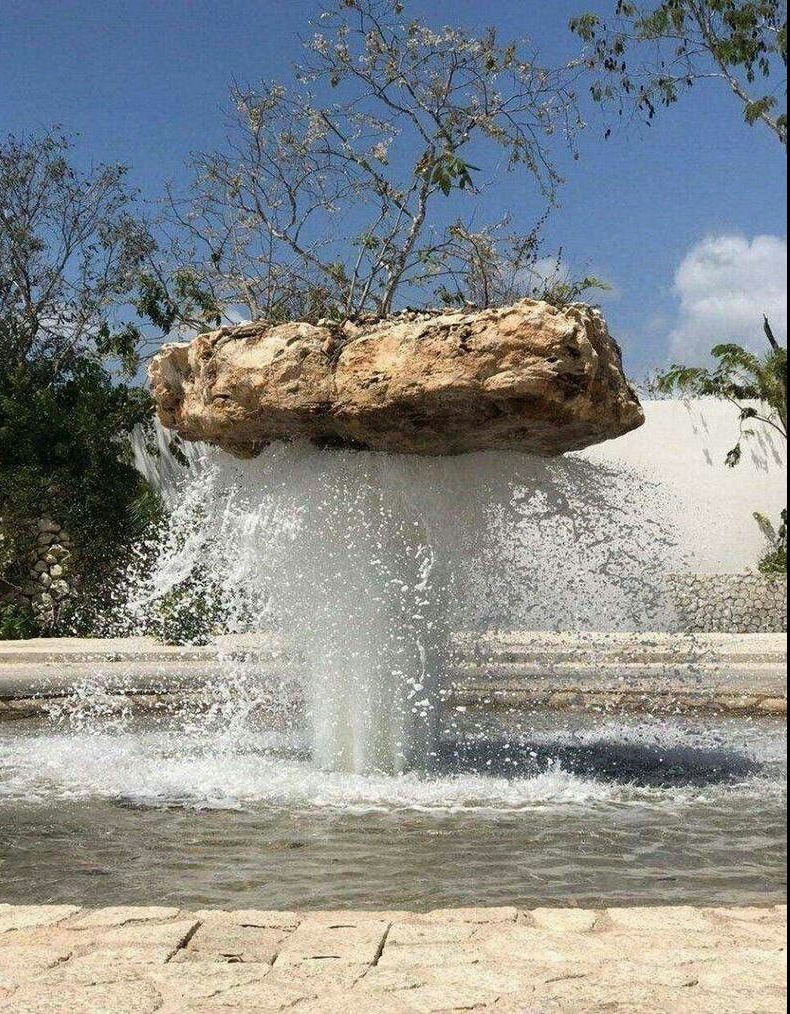
The mesmerizing fountain shown here represents one of water feature design's most captivating achievements—the floating rock illusion. This extraordinary installation features a massive natural boulder apparently suspended in mid-air, defying gravity while water cascades dramatically from its underside. The effect creates wonder and disbelief that transcends typical fountain appeal, transforming hydraulic engineering into genuine magic trick that delights viewers of all ages.
The Illusion's Secret
While the boulder appears to float impossibly, the reality involves clever engineering. A central support column—concealed within the powerful vertical water jet—physically supports the boulder's substantial weight. This hidden armature, typically stainless steel pipe, extends from solid foundation below through the stone's center, anchoring the boulder securely while remaining invisible behind the rushing water.
The dramatic water volume and velocity required to create convincing concealment necessitates substantial pump capacity—often 50+ liters per minute—ensuring the water curtain completely obscures the support structure from all viewing angles.
Dramatic Water Effects
The installation creates multiple water displays simultaneously: the powerful central geyser jet concealing the support structure, water cascading over and around the boulder's irregular surface, secondary streams flowing down the rock face, and splash and spray at the base creating dynamic, turbulent basin.
This layered water movement generates complex visual and acoustic effects—the aggressive central jet, gentle boulder overflow, and turbulent basin splash combining into rich sensory experience.
Boulder Selection and Preparation
Creating floating rock fountains requires careful stone selection. Ideal boulders possess interesting shapes with irregular surfaces creating varied water paths, substantial size commanding visual presence, natural coloring and texture appearing authentic, and appropriate weight-to-size ratio allowing practical support.
The boulder must be core-drilled to accept the support pipe—precision work requiring specialized equipment and expertise. The hole diameter must closely match the pipe size, ensuring snug fit while allowing water passage around the support structure.
Structural Engineering
Supporting multi-ton boulders demands robust foundation engineering. The installation shown likely includes concrete pad below the visible basin, steel support column embedded in foundation extending through boulder, secure connection preventing movement or rotation, and adequate basin depth accommodating both support structure and water circulation requirements.
This infrastructure remains completely hidden, maintaining the magical illusion of weightless stone.
Interactive Appeal
Floating rock fountains particularly appeal to children and families. The apparent impossibility invites investigation—viewers circle the installation seeking the trick's secret, reach toward the water trying to understand the mechanics, and photograph the seemingly impossible sight. This interactive engagement creates memorable experiences elevating these fountains beyond passive decoration.
Installation Contexts
These dramatic features suit diverse settings: resort and hospitality properties seeking memorable signature elements, water parks and family entertainment venues, botanical gardens and public parks, corporate campuses making design statements, and high-end residential properties with appropriate scale.
The installation requires substantial space—both for the feature itself and adequate viewing distance allowing the illusion to register properly.
Maintenance Considerations
Beyond typical fountain maintenance, floating rock installations require monitoring of the support structure for corrosion or movement, boulder stability ensuring connections remain secure, water pressure maintaining adequate flow for concealment, and basin integrity preventing leaks that could undermine foundations.
The specialized nature demands professional service rather than DIY approaches.
The Wonder Factor
Floating rock fountains succeed because they tap into fundamental human fascination with apparent impossibility. Even viewers understanding the engineering still experience wonder watching massive stone hover effortlessly—intellectual knowledge cannot completely dispel the visceral impact of witnessing gravity's apparent defeat.
Floating rock fountains represent water feature design's theatrical possibilities—where engineering expertise creates experiences transcending mere aesthetics to deliver genuine wonder.
Ekjan Associates | Water Is Life