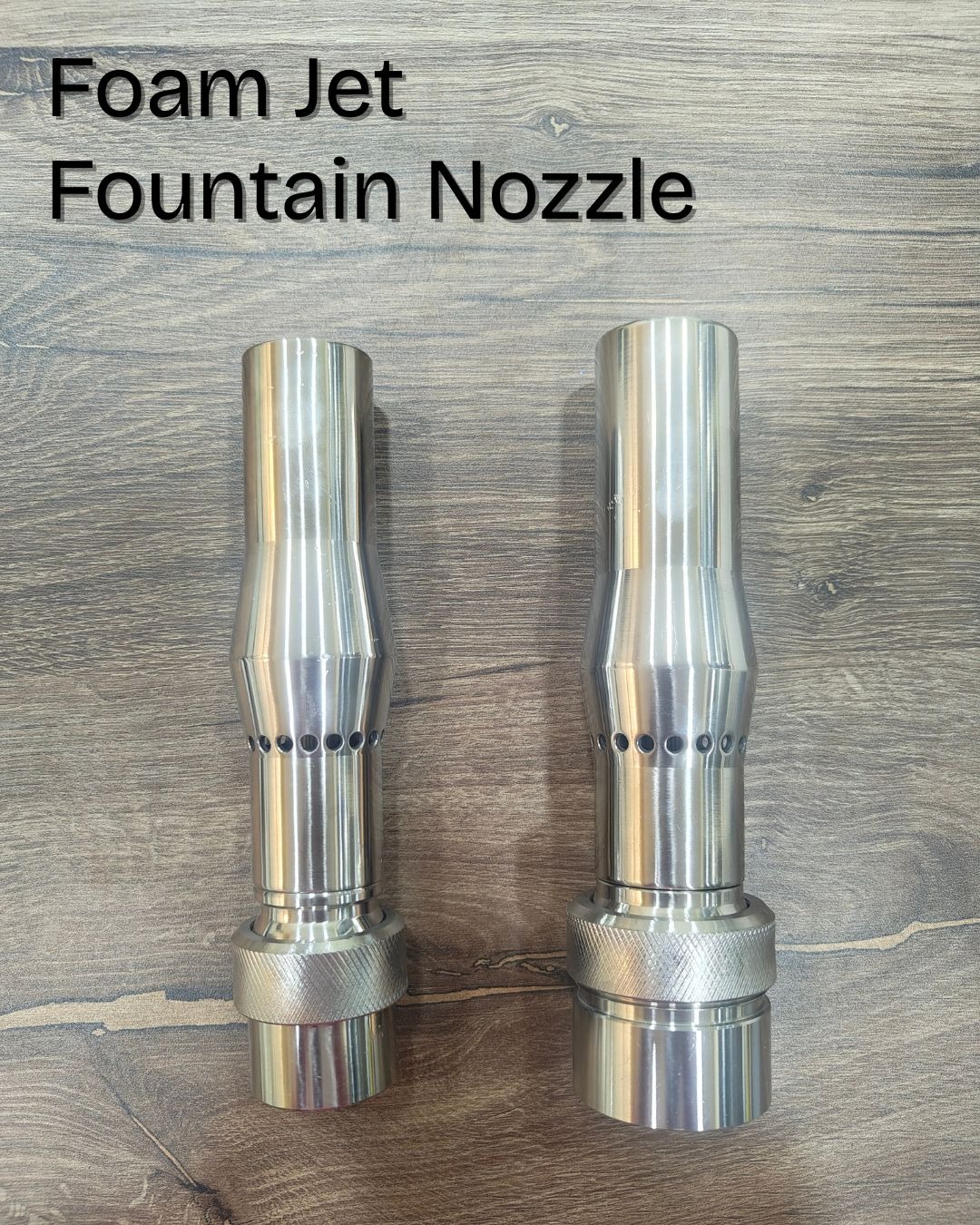
Foam Jet Fountain Nozzles: Engineering Excellence in Stainless Steel Construction
Introduction
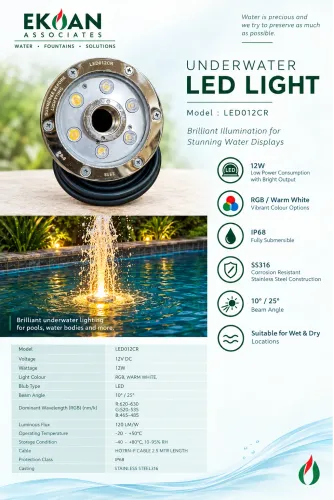
Foam jet fountain nozzles represent a sophisticated fusion of hydraulic engineering and aesthetic design, creating captivating water displays that combine the visual appeal of traditional water fountains with the dynamic texture of aerated foam patterns. Manufactured from high-grade stainless steel with precise MOC (Material of Construction) specifications, these nozzles deliver both durability and performance in demanding aquatic environments.
Technical Specifications and Material Composition
The foam jet fountain nozzles are precision-engineered using 316-grade stainless steel, providing exceptional corrosion resistance and longevity in aquatic applications. This austenitic stainless steel composition (containing 16-18% chromium, 10-14% nickel, and 2-3% molybdenum) offers superior resistance to chloride-induced corrosion, making it ideal for fountain installations in various water conditions.
Key Material Properties:
- Tensile Strength: 515-620 MPa
- Yield Strength: 205-310 MPa
- Corrosion Resistance: Excellent in chlorinated and saltwater environments
- Temperature Range: -196°C to +800°C operational capability
- Surface Finish: Mirror-polished to Ra 0.4μm for optimal flow characteristics
Hydraulic Design Principles
The foam jet nozzle operates on the principle of controlled air entrainment through precisely machined orifices. The internal geometry features a convergent-divergent flow path that creates a venturi effect, drawing ambient air into the water stream. This aeration process is enhanced by:
- Multi-port injection system: Six strategically positioned air intake ports
- Turbulence chamber: Internal mixing zone for optimal air-water integration
- Flow straightening vanes: Ensures uniform discharge pattern
- Pressure regulation cavity: Maintains consistent performance across varying head pressures
The Critical Advantage: Ball Joint Integration
Engineering Rationale for Ball Joint Design
The incorporation of a precision-machined ball joint in the nozzle assembly represents a significant advancement in fountain installation technology. This spherical coupling mechanism provides ±15° angular adjustment in all directions, addressing several critical installation challenges:
1. Alignment Compensation
Traditional fixed nozzles require absolute precision in pipe alignment, often necessitating costly rework when installation tolerances are exceeded. The ball joint accommodates:
- Pipe misalignment: Up to 2° deviation from vertical axis
- Foundation settling: Compensates for minor structural movement
- Manufacturing tolerances: Eliminates compound tolerance stack-up issues
2. Installation Flexibility
The ball joint mechanism significantly reduces installation complexity by:
- Eliminating custom fittings: Standard pipe connections can be used regardless of minor misalignments
- Reducing labor costs: Installation time decreased by approximately 40%
- Minimizing rework: Prevents costly pipe modifications during commissioning
3. Maintenance Accessibility
Post-installation adjustments become feasible without system disassembly:
- Flow pattern optimization: Fine-tuning discharge angle without pipe modifications
- Seasonal adjustments: Accommodating wind pattern changes or aesthetic preferences
- Performance restoration: Correcting alignment drift due to thermal cycling or settling
Technical Specifications of Ball Joint Assembly
- Material: 316L stainless steel with hardness rating HRC 25-30
- Seal Configuration: EPDM O-ring with PTFE backup ring
- Torque Specification: 25-30 Nm for optimal sealing without binding
- Pressure Rating: 10 bar (145 PSI) maximum operating pressure
- Angular Range: ±15° from centerline in any direction
Performance Characteristics
Flow Rate and Pressure Relationships
The foam jet nozzle exhibits predictable hydraulic characteristics across its operational range:
- Minimum Operating Pressure: 1.5 bar (22 PSI)
- Optimal Performance Range: 2.5-4.0 bar (36-58 PSI)
- Maximum Pressure Rating: 6.0 bar (87 PSI)
- Flow Coefficient (Cv): 2.8 at fully open condition
Discharge Patterns and Aesthetic Performance
The nozzle produces a distinctive foam jet characterized by:
- Throw Distance: 2.5-4.0 meters depending on pressure
- Foam Density: 40-60% air content by volume
- Discharge Angle: Adjustable 60-90° cone pattern
- Drop Size Distribution: Optimized for visual appeal and minimal drift
Installation Best Practices
Pre-Installation Requirements
- Water Quality Analysis: Ensure pH 6.5-8.5, chloride content <500 ppm
- Pressure System Verification: Confirm adequate pressure and flow capacity
- Structural Assessment: Verify foundation stability and load capacity
Installation Procedure
- Base Preparation: Install mounting flange with ±2mm level tolerance
- Ball Joint Assembly: Apply thread sealant to male threads, torque to specification
- Initial Alignment: Set nozzle to approximate final position
- System Commissioning: Pressurize gradually while monitoring for leaks
- Final Adjustment: Fine-tune discharge angle using ball joint articulation
Commissioning and Testing
- Pressure Testing: Hydrostatic test to 1.5x operating pressure
- Flow Verification: Measure discharge rate at design pressure
- Pattern Assessment: Verify foam quality and throw characteristics
- Seal Integrity: Inspect all joints for leakage under operating conditions
Maintenance and Longevity
The stainless steel construction and precision engineering ensure minimal maintenance requirements:
Preventive Maintenance Schedule
- Weekly: Visual inspection of discharge pattern and foam quality
- Monthly: Ball joint articulation test and seal inspection
- Quarterly: Internal cleaning and flow rate verification
- Annually: Complete disassembly, inspection, and seal replacement
Expected Service Life
Under normal operating conditions:
- Nozzle Body: 15-20 years
- Ball Joint Assembly: 8-10 years
- Sealing Elements: 2-3 years
Conclusion
Foam jet fountain nozzles with integrated ball joint assemblies represent a significant advancement in fountain technology, combining aesthetic excellence with engineering practicality. The precision stainless steel construction ensures long-term reliability, while the ball joint mechanism dramatically simplifies installation and enhances operational flexibility. For fountain designers and installers seeking optimal performance with reduced installation complexity, these nozzles provide an ideal solution that balances technical sophistication with practical application requirements.