Linear Fountain Arrays: Creating Dynamic Urban Water Features
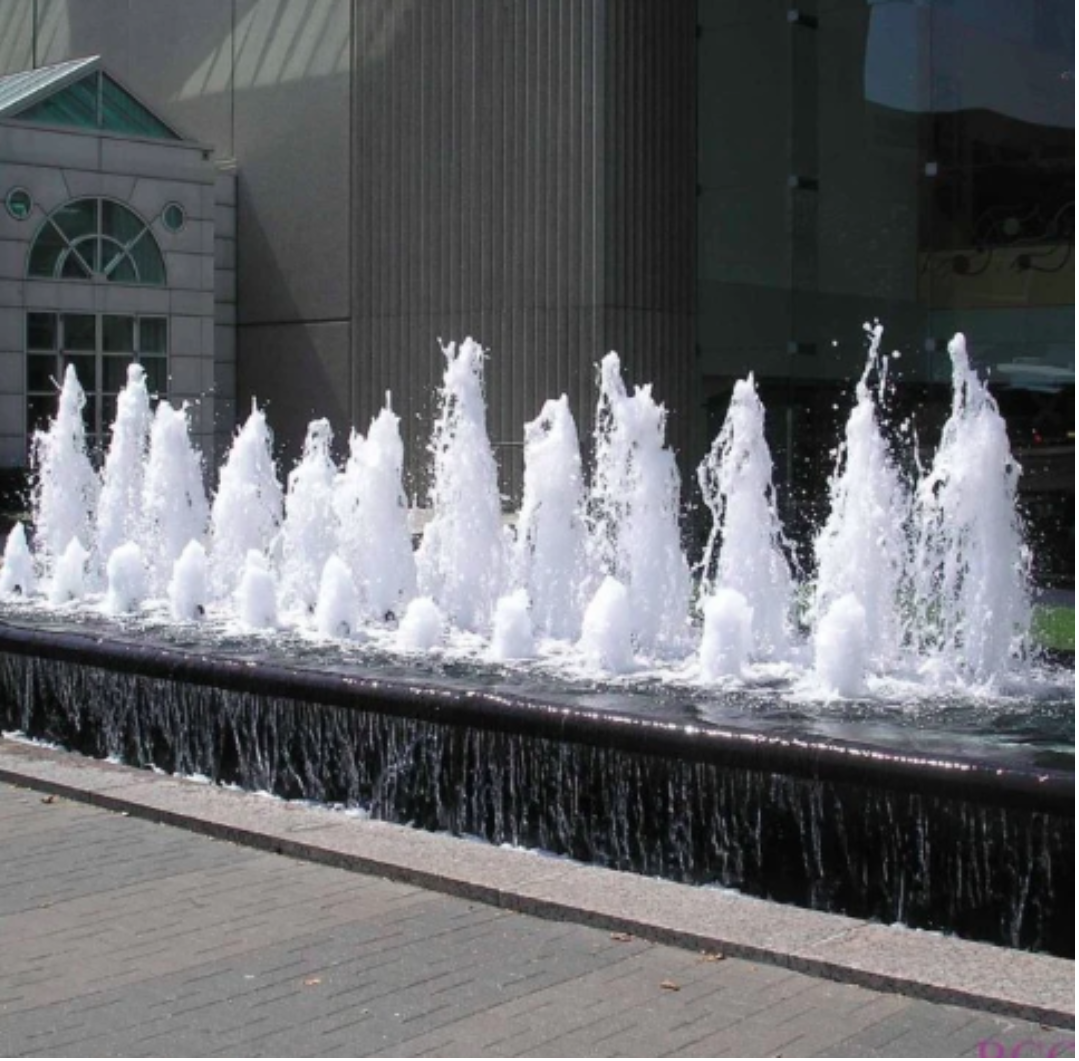
The striking installation shown here demonstrates the dramatic impact of linear fountain arrays in contemporary urban design. This extensive water feature—stretching along what appears to be a commercial or civic building facade—showcases how multiple coordinated fountain jets transform simple water delivery into captivating public art that engages pedestrians and animates architectural spaces.
The Power of Repetition
Multiple vertical jets arranged in precise linear formation create visual rhythm impossible to achieve with single fountain elements. The installation displays dozens of foam or geyser-style jets producing tall, white columns of aerated water that create a "water wall" effect—solid enough to appear substantial yet transparent enough to maintain visual connection to the building beyond.
The uniform height and spacing create order and intentionality that communicates thoughtful design rather than arbitrary placement. This discipline transforms functional water circulation into architectural statement that enhances rather than competes with surrounding structures.
Architectural Integration
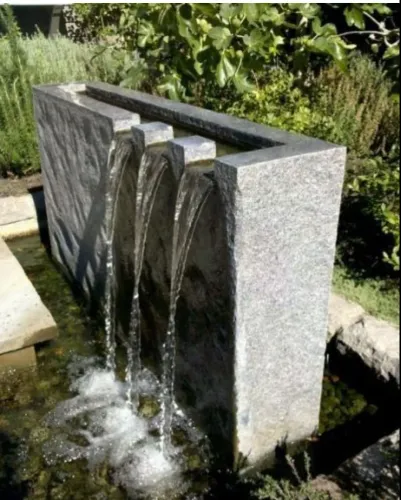
The dark granite or stone basin with its knife-edge overflow creates sophisticated backdrop for the white water columns. Water cascading over the basin edge produces secondary visual interest—a smooth water sheet flowing down the basin face that complements the vertical jets above. This layered approach adds dimensional complexity to what could be simple vertical water projection.
The substantial basin width accommodates the dense jet arrangement while providing adequate water volume for recirculation. The flush integration with surrounding pavement creates seamless transitions between fountain and hardscape—no awkward edges or barriers disrupting pedestrian flow.
Technical Considerations
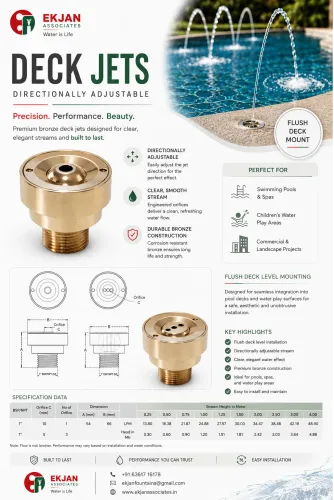
Creating uniform spray patterns across multiple nozzles demands sophisticated hydraulic engineering. Each jet must receive identical pressure and flow despite varying distances from pump source. This requires carefully designed manifold systems with balanced pressure distribution—likely incorporating individual flow adjustment capability at each nozzle for fine-tuning during commissioning.
The foam jet or geyser nozzle type creates the distinctive white, aerated appearance through internal air mixing. This aeration reduces apparent water density, allowing impressive height with moderate water volumes while creating the opaque white columns that provide high visibility against varied backgrounds.
Public Space Activation
Linear fountains excel at activating pedestrian zones. The constant movement and sound draw attention and encourage lingering. The accessibility—no barriers preventing close approach—invites interaction while the substantial water volume creates impressive presence suitable for large public spaces.
The feature serves practical purposes beyond aesthetics: the water sound masks traffic noise, creating acoustic comfort in urban settings; the evaporative cooling provides microclimate benefits during warm weather; and the visual drama establishes identity and landmark quality that aids wayfinding and creates memorable spaces.
Maintenance and Operations
The extensive nozzle array requires comprehensive filtration systems maintaining water clarity essential for visual appeal. Individual nozzle maintenance access allows periodic cleaning without complete system shutdown—critical for installations in high-traffic public spaces where extended downtime affects user experience.
Programmable control systems enable varied operational modes—full display during peak hours, reduced operation during quiet periods, complete shutdown for maintenance or weather events. This operational flexibility balances visual impact with resource conservation.
Linear fountain arrays represent urban water feature design at its most impactful—transforming circulation infrastructure into dynamic public art.
Ekjan Associates | Water Is Life