Sculptural Play Fountains: Where Art, Water, and Recreation Converge
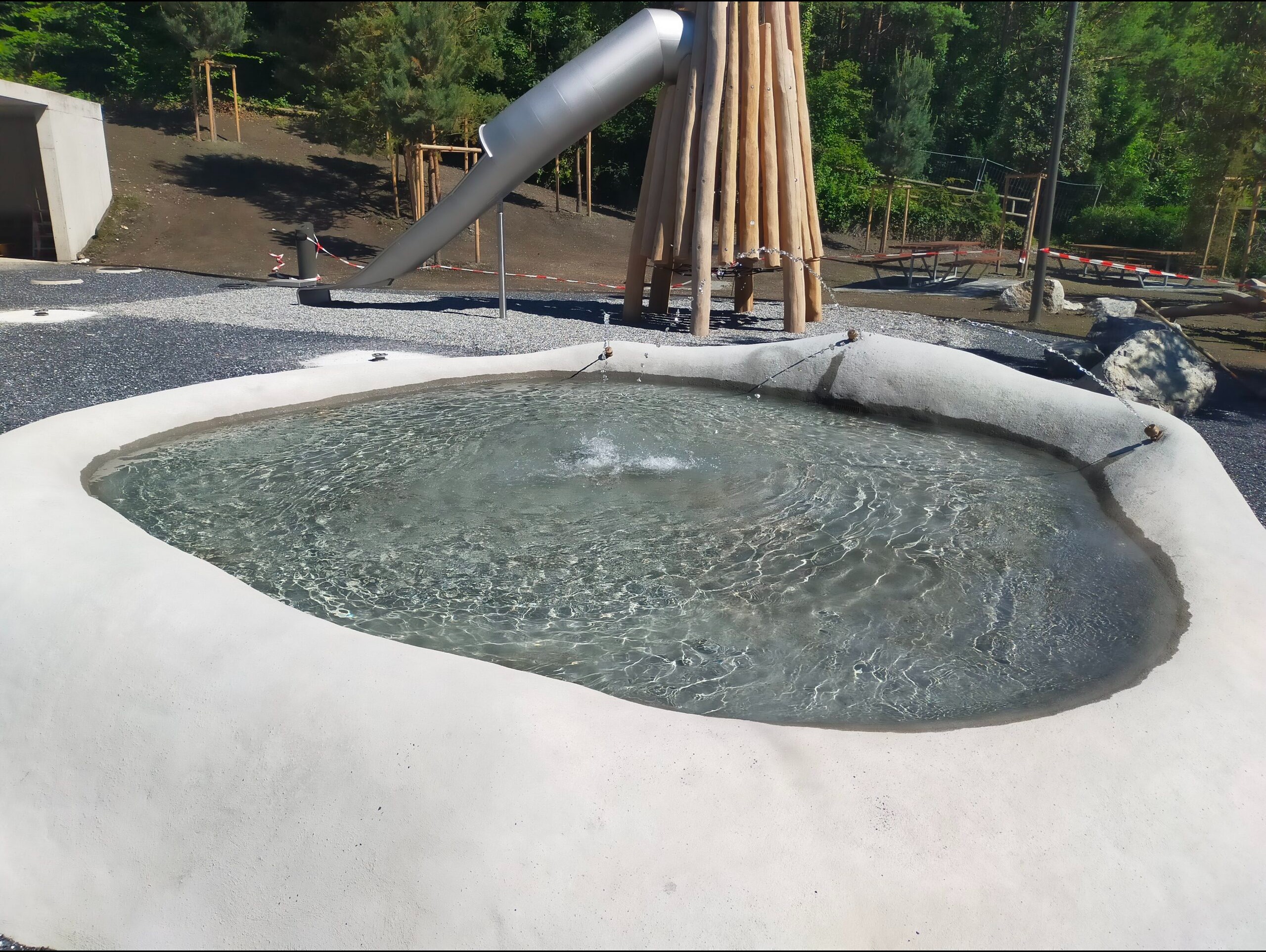
The innovative water feature at Family Park Waldhotel Vaduz, created by Aquatransform, exemplifies contemporary approaches to public water features that prioritize playful interaction over formal display. This organic, naturalistic basin with its irregular sculptural edges and playful water cannon demonstrates how modern fountain design moves beyond traditional aesthetics to create engaging, multi-functional installations that delight children while maintaining artistic integrity.
The Interactive Water Feature Revolution
Traditional fountains functioned as visual focal points—beautiful to observe but not intended for physical interaction. Contemporary play fountains like this Vaduz installation reverse that paradigm, prioritizing tactile engagement and playful exploration while maintaining sophisticated design sensibility.
The irregular basin shape—reminiscent of natural water pools or abstract organic forms—creates visually interesting geometry while accommodating varied play patterns. Children can approach from multiple angles, explore the varied depths and edges, and interact with water in intuitive, discovery-based ways.
Sculptural Integration
The substantial sculptural elements visible—organic boulder-like forms integrated into the basin edge—blur boundaries between functional basin and artistic installation. These elements provide climbing opportunities, seating areas, and visual interest while serving practical purposes like concealing mechanical components and directing water flow.
The interplay between smooth concrete surfaces and textured sculptural elements creates tactile variety encouraging exploration and varied interaction patterns.
The Water Cannon Feature
The substantial angled tube visible—likely a manually-operated water cannon or adjustable fountain element—introduces dynamic, controllable water play unavailable in passive fountain designs. Children manipulate this element creating personalized water effects, fostering creative play and enabling social interaction as they collaborate or compete around water control.
This interactive component transforms the feature from static water body into playground element where children actively shape their experience.
Safety-Conscious Design
The shallow depth, graduated edges, and non-slip surfaces visible demonstrate safety considerations paramount in public play fountains serving children. The organic basin shape eliminates sharp corners while the substantial surrounding concrete provides generous splash zone preventing slippery conditions extending into circulation areas.
The clear sightlines allow supervising adults to monitor children from surrounding areas—critical for public park installations where parental oversight matters.
Naturalistic Material Palette
The neutral concrete finish, organic forms, and natural material integration create aesthetic harmony with the surrounding park landscape visible. Rather than imposing geometric precision onto natural settings, the feature's organic character feels appropriate to its wooded park context.
This material sensitivity ensures the fountain enhances rather than disrupts the park's character—appropriate restraint for installations within natural or semi-natural landscapes.
Multi-Generational Appeal
While clearly designed for children, the sculptural quality and thoughtful design engage adults aesthetically. Parents appreciate the artistic merit while supervising play—creating family-friendly spaces that don't condescend to either audience.
This dual appeal makes installations like this valuable community assets activating parks across age demographics rather than serving narrow audiences.
Seasonal and Weather Adaptability
The robust construction withstands varied weather while the simple basin design facilitates winterization in cold climates. During off-season when water features aren't operational, the sculptural elements maintain visual interest—the installation contributes to park aesthetics year-round rather than becoming abandoned eyesore when drained.
Sustainable Operation
Modern play fountains incorporate water conservation through efficient recirculation, energy management via variable-speed pumps, and filtration systems maintaining water quality despite intensive use. These operational considerations ensure features remain sustainable long-term assets rather than resource-intensive burdens.
The Aquatransform Design Philosophy
Installations like the Vaduz fountain reflect contemporary thinking about public water features—prioritizing engagement over observation, encouraging play over passive appreciation, integrating art with function, and respecting natural contexts through organic design language.
This approach creates beloved community destinations where water becomes medium for play, learning, and social connection—features justifying investment through measurable community benefit.
Sculptural play fountains represent public water feature design's future—where artistic vision, child development understanding, and technical sophistication unite creating installations that enrich communities through active engagement.
Ekjan Associates | Water Is Life