Still Waters at Untermeyer How a century-old reflecting pool became one of America's most quietly arresting places
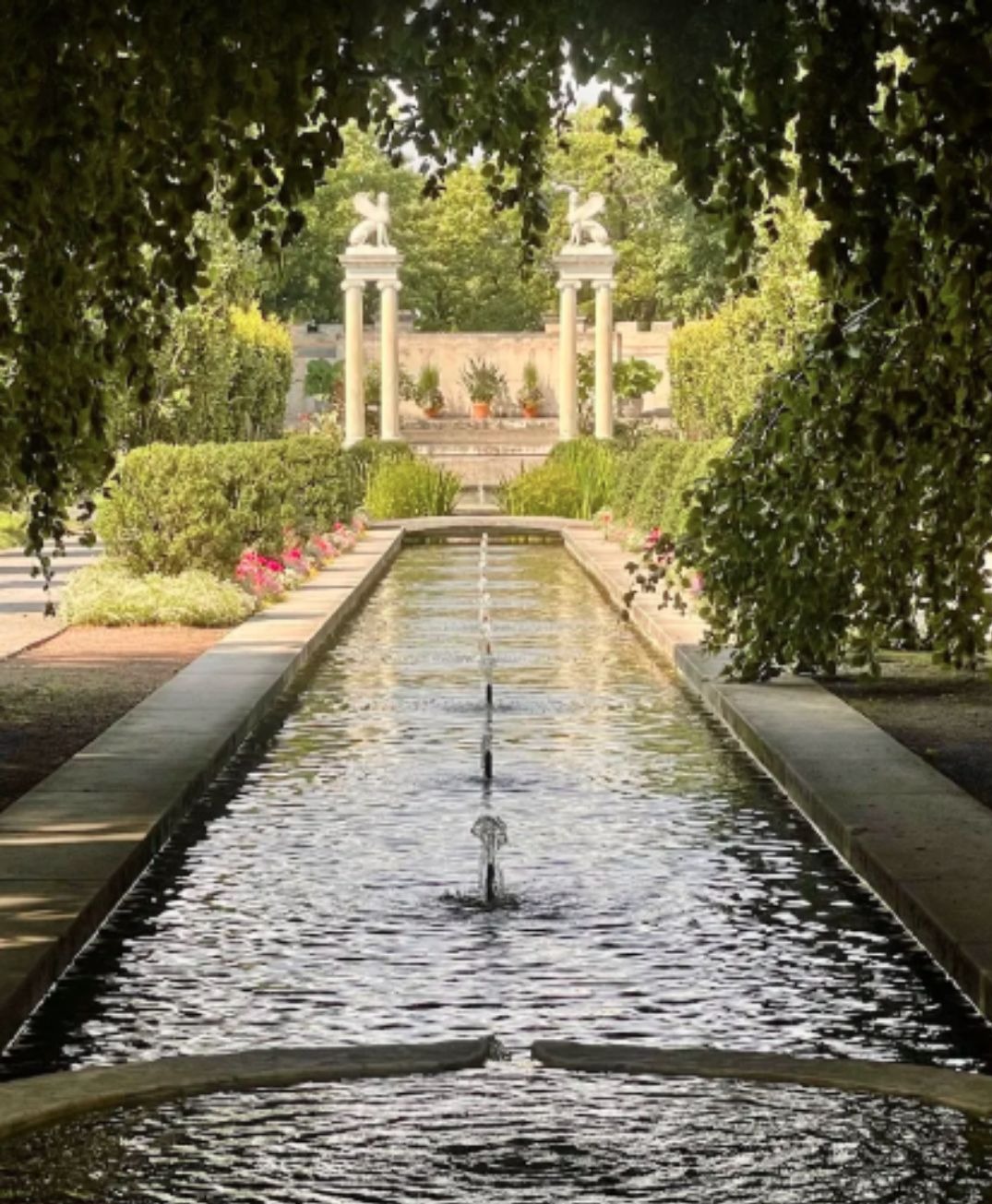
Framed by a tunnel of cascading ivy and anchored by twin sphinx-topped columns, the Persian Canal at Untermeyer Gardens stretches like a held breath. A single jet of water breaks the surface; beyond it, the classical pergola stands in amber morning light. It is, simply, one of the most beautiful garden compositions in America.
Samuel Untermeyer commissioned this garden in the early twentieth century, and the Persian Canal — inspired by the formal water channels of Islamic garden design — remains its soul. The long, still pool is not decorative accent. It is the architecture.
"Water that moves slowly does not rush you. It teaches you to stay."
There is a reason these narrow reflecting canals, from the Alhambra to Versailles to Untermeyer, have endured across cultures and centuries. Still water forces a pause. The reflection doubles the world and softens it. The sound — barely a trickle — replaces mental noise with something older and more patient. Science now confirms what poets always knew: proximity to calm water lowers cortisol, slows breath, and restores attentional capacity. Blue spaces, researchers call them. The soul calls them sanctuaries.
Untermeyer was nearly lost to decades of neglect. The Conservancy's restoration has returned this canal to its full dignity, and visiting it today feels less like tourism than like remembering something you forgot you needed.