The Timeless Elegance of Cambridge's Winter Water Features: A Study in Harmonious Design
Discovering the art of fountain design through Cambridge's frost-kissed landscapes
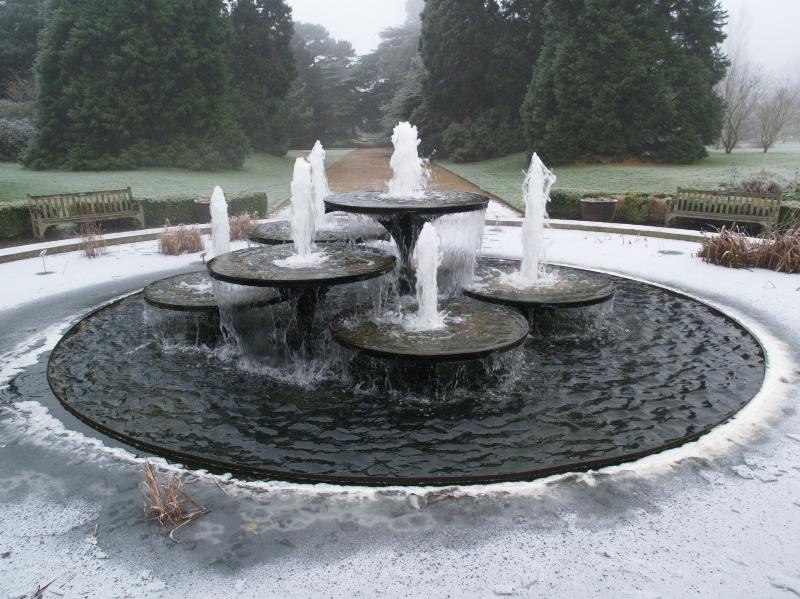
As winter settles over Cambridge's manicured gardens, a remarkable sight emerges where many would expect dormancy—a water fountain continuing its graceful dance despite the season's chill. This circular masterpiece, captured in its frosty glory, offers profound insights into the intersection of functional design, aesthetic beauty, and urban planning that defines Cambridge's commitment to year-round public spaces.
The Fountain: A Symphony of Circles and Jets
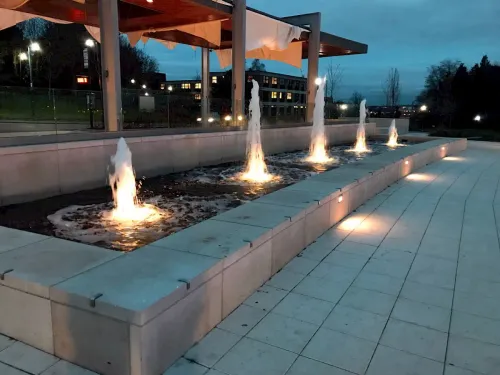
The fountain before us exemplifies sophisticated water feature design through its multi-tiered circular arrangement. At its heart lies a central elevated basin, crowned with a dramatic vertical jet that serves as the composition's focal point. Surrounding this centerpiece, four satellite basins create a perfect quaternary symmetry, each contributing its own vertical water column to the ensemble.
What makes this design particularly striking is its geometric harmony. The circular pool creates a unifying boundary that contains and frames the entire composition, while the varying heights of water jets create visual rhythm and movement. Even in winter, when ice crystals form delicate patterns on the surrounding surfaces, the fountain maintains its operational beauty—a testament to thoughtful engineering that considers seasonal challenges.
Design Principles for Exceptional Water Fountains
1. Geometric Foundation and Symmetry
Successful fountain design begins with strong geometric principles. This Cambridge fountain demonstrates how circular forms create natural gathering points and visual anchors in landscape design. The concentric arrangement draws the eye inward while the symmetrical placement of the four outer basins provides balance without monotony.
Designer Recommendation: Establish a clear geometric vocabulary early in the design process. Whether circular, square, or organic, the chosen form should relate to the surrounding architecture and landscape patterns.
2. Hierarchical Water Elements
The varying heights of water jets create visual hierarchy—the central fountain commands attention while the satellite features provide supporting rhythm. This layered approach prevents visual chaos while maintaining interest from multiple viewing angles.
Designer Recommendation: Plan water features with primary, secondary, and tertiary elements. Consider how the composition reads from different distances and elevations.
3. Seasonal Resilience
Cambridge's climate demands fountains that function year-round. This installation likely incorporates heating elements or circulation systems that prevent complete freezing while allowing for beautiful ice formations that enhance rather than destroy the design.
Designer Recommendation: Integrate climate-responsive technology from the design phase. Consider how seasonal changes can become design features rather than obstacles.
4. Contextual Integration
The fountain's placement within the broader landscape shows careful consideration of sightlines, circulation patterns, and the relationship to surrounding trees and pathways. The formal design complements the park's structured layout while providing a dynamic counterpoint to static elements.
The Cambridge Context: Significance and Legacy
Cambridge's commitment to public water features reflects the city's broader philosophy of creating spaces that serve both functional and cultural purposes. This fountain exists within a tradition of English garden design that values the integration of water elements as both aesthetic and ecological features.
Historical Resonance
Water features in Cambridge connect to centuries of garden design tradition, from the formal parterres of great estates to the democratic public spaces of modern urban planning. This fountain bridges those traditions, offering classical symmetry in a contemporary public setting.
Environmental Considerations
Modern fountain design in Cambridge must balance aesthetic goals with environmental responsibility. Features like this often incorporate recirculating systems, energy-efficient pumps, and sustainable materials that minimize environmental impact while maximizing public benefit.
Social Function
Beyond its visual appeal, the fountain serves as a gathering point, a landmark for navigation, and a source of ambient sound that masks urban noise. The circular seating arrangement visible in the image acknowledges the fountain's role as a social catalyst.
Technical Design Considerations
Water Circulation and Quality
Effective fountain design requires sophisticated water management systems. The multiple basins likely share a common filtration and circulation system, with carefully calculated flow rates that maintain water quality while achieving desired visual effects.
Structural Engineering
The raised basins require robust structural support to handle water loads, thermal expansion, and potential ice damage. The apparently seamless integration of mechanical systems speaks to skilled engineering coordination.
Maintenance Accessibility
Successful public fountains incorporate maintenance considerations from the design phase. Access panels, drain systems, and equipment placement must balance functionality with aesthetic integrity.
Lessons for Contemporary Designers
This Cambridge fountain offers several key insights for contemporary water feature design:
Scale Appropriately: The fountain's size relates harmoniously to its setting—large enough to create impact, intimate enough to invite approach.
Embrace Seasonality: Rather than shutting down in winter, the fountain becomes a different kind of spectacle, with ice and frost adding unexpected beauty.
Layer Experiences: The design works from multiple perspectives—as a distant landmark, a mid-range composition, and an intimate encounter with water and light.
Integrate Infrastructure: Mechanical systems disappear into the design, creating the illusion of effortless operation while ensuring reliable performance.
The Future of Urban Water Features
As cities like Cambridge continue to evolve, water features face new challenges around sustainability, accessibility, and climate resilience. This fountain's apparent success suggests that thoughtful design can address these concerns while maintaining the timeless appeal that makes public water features valuable urban amenities.
The integration of smart technologies, sustainable materials, and climate-responsive systems will likely define the next generation of urban fountains. However, the fundamental principles demonstrated here—geometric clarity, hierarchical composition, and contextual sensitivity—will remain relevant regardless of technological advances.
Conclusion
Cambridge's winter fountain stands as more than a decorative element; it represents a philosophy of public space design that values beauty, function, and community simultaneously. For designers approaching water feature projects, it offers a masterclass in balancing multiple competing demands while creating something that transcends mere functionality to become truly memorable.
In our increasingly urbanized world, such thoughtfully designed public amenities remind us that cities can be both efficient and beautiful, functional and inspiring. They demonstrate that good design is not a luxury but a necessity for creating urban environments where people want to live, work, and gather.
The frost may settle and the seasons may change, but well-designed water features like this Cambridge fountain continue to enrich public life through every season—a testament to the enduring power of thoughtful design to enhance human experience in urban landscapes.