Ultrasonic Mist Makers: The Ultimate Guide for Decoration and Mushroom Farming
Ultrasonic mist makers have revolutionized both decorative applications and mushroom cultivation, offering an efficient, quiet, and visually stunning way to create fine mist effects. These compact devices use high-frequency vibrations to transform water into microscopic droplets, creating an ethereal fog that serves both aesthetic and practical purposes.
How Ultrasonic Mist Makers Work
Unlike traditional steam generators that use heat, ultrasonic mist makers employ piezoelectric transducers that vibrate at frequencies above 20,000 Hz. These vibrations create cavitation bubbles in water, which then collapse and release tiny water particles into the air as cool mist. This process is energy-efficient, safe, and produces a consistent fog output without raising ambient temperature.
Decorative Applications: Creating Magical Atmospheres
Indoor Water Features
Transform ordinary fountains, aquariums, and water bowls into mesmerizing displays. The mist creates dramatic lighting effects when combined with LED illumination, producing rainbow colors and mysterious ambiance perfect for:
- Home gardens and zen spaces
- Restaurant and hotel lobbies
- Wedding and event decorations
- Halloween and theatrical displays
- Meditation rooms and spas
Landscape Design
Outdoor applications include pond enhancement, garden focal points, and pathway lighting effects. The mist naturally follows air currents, creating dynamic, ever-changing patterns that captivate viewers and add tranquility to any space.
Artistic Installations
Artists and designers use ultrasonic mist makers to create interactive installations where visitors can walk through clouds of mist, with sensors triggering different fog patterns and colors based on movement.
Mushroom Farming: Precision Humidity Control
Why Humidity Matters in Mushroom Cultivation
Most edible mushrooms require 80-95% relative humidity during fruiting stages. Traditional misting systems often create water droplets too large, leading to bacterial contamination or drowning delicate mushroom pins. Ultrasonic mist makers solve this by producing particles 1-10 microns in size that maintain optimal humidity without oversaturating.
Benefits for Mushroom Growers
Contamination Prevention: The fine mist doesn't create standing water where harmful bacteria and molds can proliferate.
Even Distribution: Multiple transducers ensure uniform humidity throughout growing chambers.
Energy Efficiency: Operating costs are significantly lower than heating-based humidification systems.
Automation Compatibility: Easy integration with timers, humidity controllers, and monitoring systems for hands-free operation.
Species-Specific Applications
Different mushroom varieties benefit from ultrasonic misting:
- Oyster mushrooms: Require consistent 85-90% humidity during pinning
- Shiitake: Need humidity cycling between 80-95% for proper cap development
- Lion's Mane: Thrive with steady 90% humidity and gentle air circulation
- Reishi: Require extended high humidity periods for proper spore development
Technical Specifications and Selection
Power and Output
Most units range from 24W to 400W, with mist output measured in milliliters per hour. For decoration, 100-300ml/hr is typically sufficient. Mushroom operations may require 500-1500ml/hr depending on chamber size.
Transducer Configuration
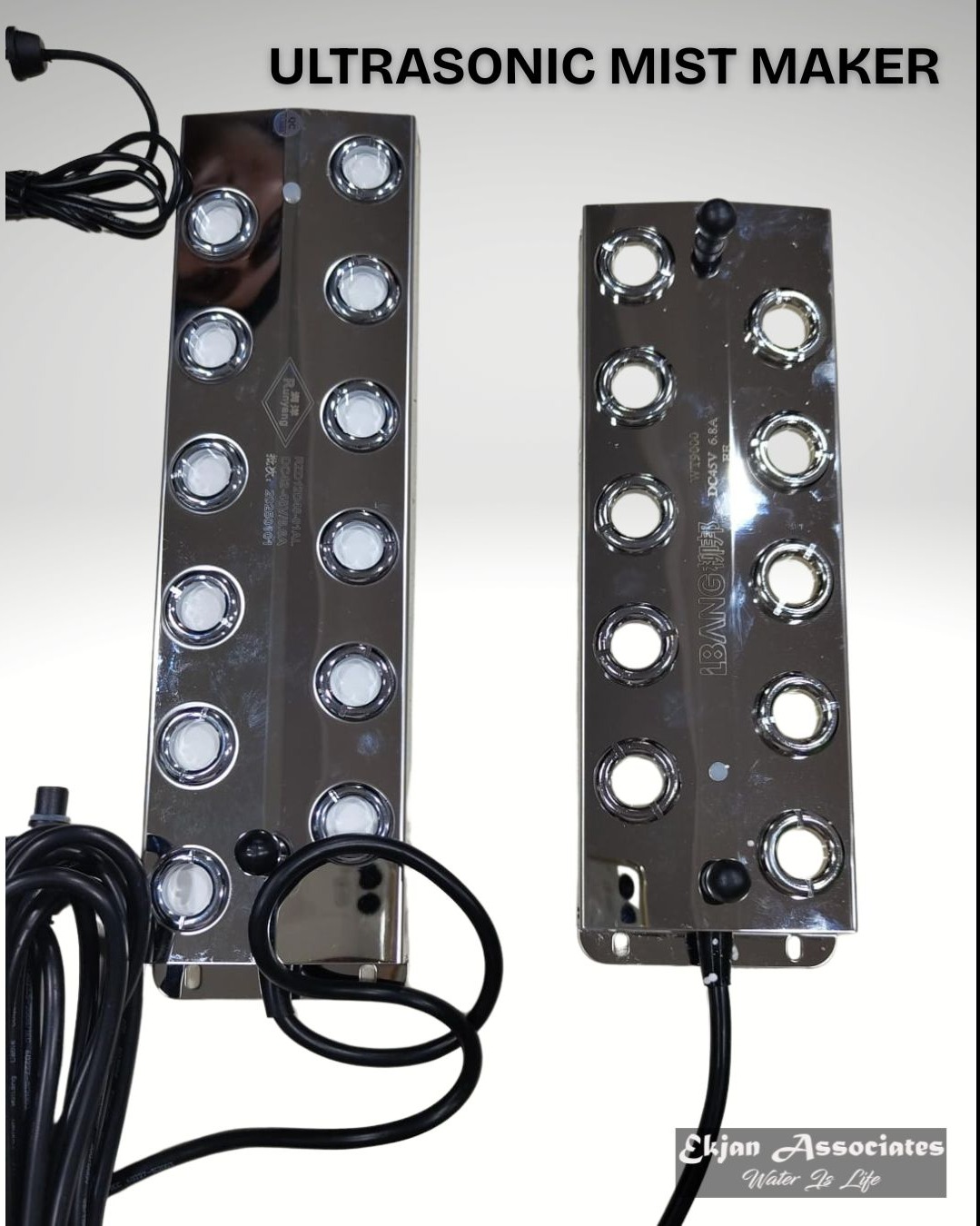
Single-disc units work well for small applications, while multi-disc arrays (like the 12-disc units shown in the image) provide higher output and redundancy for commercial operations.
Water Quality Requirements
Ultrasonic mist makers are sensitive to water quality. Use distilled or RO water to prevent mineral buildup on transducers. Hard water will quickly reduce efficiency and require frequent cleaning.
Installation and Maintenance
Setup Considerations
Position units in water containers with adequate depth (minimum 2 inches above transducers). Ensure proper ventilation to prevent condensation damage to electronics. For mushroom farming, incorporate float switches to maintain consistent water levels.
Routine Maintenance
Clean transducers weekly with soft brushes to remove mineral deposits. Replace ceramic discs every 3000-5000 hours of operation. Check electrical connections regularly in high-humidity environments.
Troubleshooting Common Issues
Reduced mist output often indicates mineral buildup or low water levels. Unusual noises may signal worn transducers. Always disconnect power before cleaning or servicing.
Safety and Best Practices
Electrical Safety
Use GFCI-protected outlets in wet environments. Keep electrical connections elevated and sealed. Consider low-voltage DC units for added safety in mushroom growing facilities.
Water Treatment
Add a few drops of white vinegar to prevent algae growth in decorative applications. For mushroom farming, maintain sterile water conditions and change water every 2-3 days.
Optimal Performance Tips
Monitor humidity levels with digital hygrometers. Use timers to cycle mist on/off, preventing oversaturation. Position air circulation fans to distribute mist evenly without creating drafts directly over transducers.
Cost-Benefit Analysis
Initial investment ranges from $30 for basic single-disc units to $300+ for professional multi-disc systems. Operating costs are minimal due to low power consumption. For mushroom farmers, improved yields and reduced contamination rates typically justify the investment within one growing cycle.
Future Innovations
Smart ultrasonic mist makers now feature WiFi connectivity, allowing remote monitoring and control via smartphone apps. Advanced models incorporate sensors for automatic humidity regulation and predictive maintenance alerts.
Conclusion
Ultrasonic mist makers represent a convergence of art and science, enhancing both aesthetic environments and agricultural productivity. Whether creating enchanting water features or optimizing mushroom growing conditions, these versatile devices offer reliable, efficient, and visually stunning solutions. With proper selection, installation, and maintenance, ultrasonic mist makers provide years of trouble-free operation while transforming ordinary spaces into extraordinary experiences.
The technology continues evolving, with manufacturers developing more powerful, durable, and intelligent systems. As both decorative and agricultural applications expand, ultrasonic mist makers are becoming essential tools for creators and cultivators seeking precision control over their environments.