The Timeless Harmony: Water Features and Greenery in Modern Landscapes
There's something inherently captivating about the marriage of water and plants in landscape design. Whether it's a sleek modern fountain cutting through an urban courtyard or a naturalistic pond nestled in a garden, water features surrounded by lush greenery create spaces that speak to something deep within us. This isn't mere aesthetic preference—it's a design principle rooted in nature itself, one that transforms ordinary outdoor spaces into sanctuaries of tranquility and visual delight.
The Modern Water Feature Renaissance
Contemporary landscape design has witnessed a remarkable evolution in water feature design. Gone are the days when fountains were merely ornamental afterthoughts. Today's water features serve as architectural focal points, combining form and function with environmental consciousness. From minimalist geometric troughs with seamless water edges to dramatic cascading walls, modern water features embrace clean lines, sustainable materials, and innovative engineering.
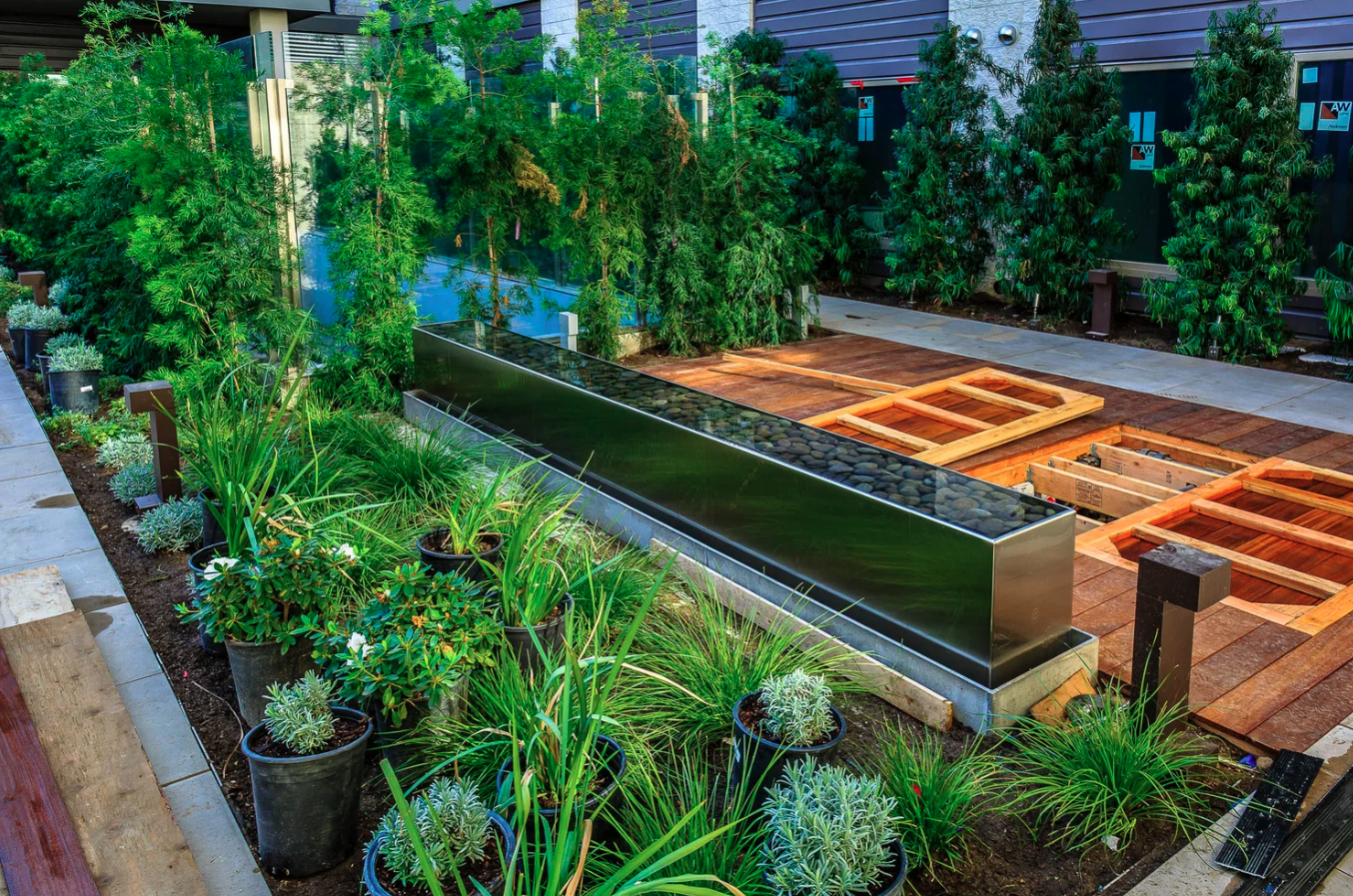
The image of the sleek bronze-toned fountain surrounded by verdant bamboo and ornamental grasses exemplifies this contemporary approach. The reflective metal surface creates a stunning contrast with the organic textures of the surrounding vegetation, while the geometric precision of the trough complements rather than competes with nature's flowing forms.
Why Greenery and Water Are Natural Partners
The Biological Connection
In nature, water sources invariably become hubs of plant life. This isn't coincidental—it's evolutionary design. Plants naturally gravitate toward water, and their presence around water features in our designed landscapes taps into this fundamental relationship. When we surround fountains and water features with greenery, we're essentially recreating nature's blueprint, which our eyes and minds instinctively recognize as "right."
This biological familiarity creates an immediate sense of place and belonging. Even in the most urban of settings, a water feature framed by plants becomes a pocket of nature, a reminder of riparian landscapes where life concentrates and thrives.
Visual Contrast and Texture
The interplay between water's fluidity and foliage's texture creates dynamic visual interest that neither element achieves alone. Water provides smooth, reflective surfaces that capture light and movement, while plants offer varied textures, depths, and layers. Ornamental grasses with their fine, flowing blades mirror water's movement, while broader-leafed plants like hostas or elephant ears provide bold contrast.
The vertical elements of bamboo or tall grasses create height and structure, drawing the eye upward and making spaces feel larger and more dimensional. Meanwhile, the horizontal plane of the water surface grounds the composition, creating balance and repose.
The Play of Light
One of the most magical aspects of pairing greenery with water features is how light dances between the two elements. Water reflects and refracts light, creating shifting patterns that animate the surrounding foliage. Sunlight filtering through leaves casts dappled shadows on water surfaces, while the water's reflection illuminates the underside of plants, revealing details often lost in traditional plantings.
At night, strategic lighting transforms this relationship entirely. Uplighting through ornamental grasses creates dramatic silhouettes, while underwater lighting makes the water glow, turning surrounding plants into living sculptures.
Sound and Sensory Experience
Water features aren't just visual—they're auditory experiences that create layers of sensory richness. The gentle trickle or dramatic splash of moving water provides white noise that masks urban sounds and creates a cocoon of calm. Plants enhance this experience by rustling in the breeze, adding subtle organic sounds that complement water's voice.
The combination also affects the microclimate, as water features cool the surrounding air through evaporation while plants provide shade and filter air. Together, they create comfortable micro-environments that draw people in and encourage them to linger.
Design Principles for Pairing Water and Plants
Scale and Proportion
Successful integration of water features and greenery requires thoughtful consideration of scale. The water feature should be proportional to the surrounding space, with plantings that complement rather than overwhelm. In the contemporary design shown, tall bamboo provides privacy and structure without diminishing the fountain's impact, while lower ornamental grasses soften edges without obscuring the water's surface.
Layering for Depth
Professional landscape designers employ layering techniques that create depth and visual interest. Start with tall background plants for structure and privacy, add mid-height plants for body and texture, and finish with low-growing ground covers and edge plants that soften hard lines. This layered approach mimics natural plant communities and creates a sense of abundance and maturity even in newly installed landscapes.
Material Harmony
Modern water features often incorporate materials like weathered steel, copper, concrete, or glass. Select plants that complement these materials—fine-textured grasses soften hard edges, while bold architectural plants like phormiums or cordylines echo contemporary materials' geometric precision.
Maintenance Considerations
The practical aspects of combining water and plants shouldn't be overlooked. Choose plants that thrive in the moisture levels present near water features. Some areas may be quite wet, suitable for moisture-loving plants like irises or papyrus, while areas just beyond the water's influence may be drier. Understanding these microclimates ensures healthy plants and reduces maintenance demands.
The Psychological Impact
Beyond aesthetics, the combination of water features and greenery delivers measurable psychological benefits. Studies consistently show that exposure to nature—even in designed landscapes—reduces stress, lowers blood pressure, and improves mood. Water features, in particular, promote feelings of tranquility and restoration.
This biophilic response—our innate attraction to nature—means that spaces incorporating water and plants aren't merely beautiful; they're actively beneficial to our wellbeing. In urban environments where natural landscapes are scarce, these designed oases serve crucial roles in mental health and quality of life.
Creating Timeless Beauty
The pairing of water features and greenery transcends trends because it's rooted in natural principles that have remained constant throughout human history. Whether executed in contemporary style with clean lines and minimalist plantings or in traditional designs with exuberant cottage garden plants, the fundamental relationship between water and vegetation creates spaces that feel complete and harmonious.
As we continue to seek connections with nature in increasingly urbanized environments, water features surrounded by lush greenery offer powerful solutions. They transform sterile spaces into living environments, create focal points that anchor designs, and provide daily reminders of nature's beauty and resilience.
The marriage of water and plants isn't just good design—it's essential design, honoring the patterns nature has perfected over millennia while creating spaces that nourish the human spirit.