Indoor Rock Gardens with Water Features: Bringing Mountain Landscapes Inside
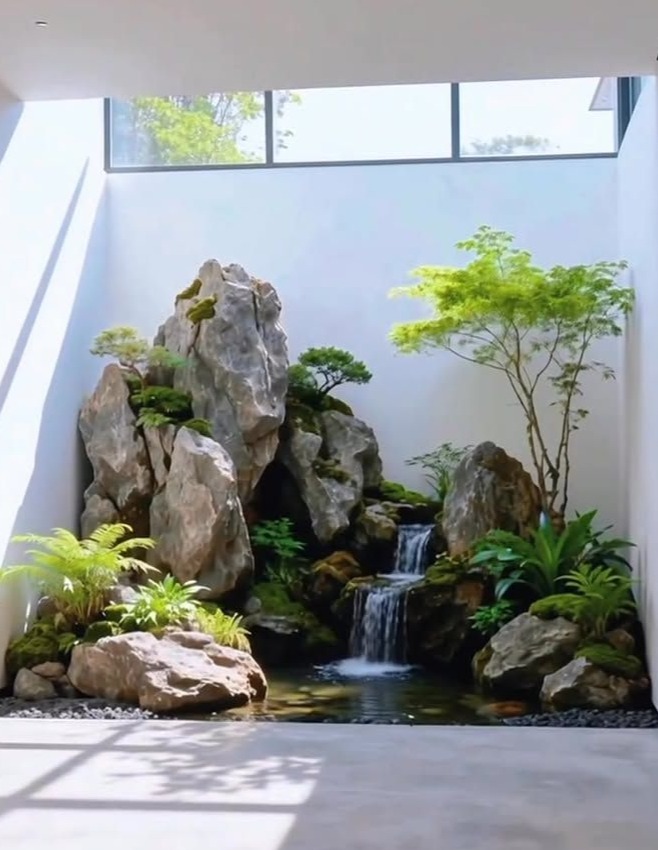
The breathtaking installation shown here represents the pinnacle of interior landscape design—a complete mountain ecosystem captured within a contemporary home's walls. This extraordinary indoor rock garden, featuring dramatic stone formations, cascading waterfall, and lush plantings, transforms a simple interior corner into living artwork that connects inhabitants to nature despite urban contexts. The installation demonstrates how thoughtful design transcends conventional houseplants to create genuine sanctuary spaces within modern architecture.
Architectural Integration as Canvas
The minimalist white alcove provides perfect gallery space for this naturalistic composition. The clean contemporary architecture—pristine white walls, geometric ceiling, sleek window bands—creates intentional contrast making the organic rock garden appear even more dramatic. This dialogue between manufactured precision and natural irregularity generates visual tension that energizes the entire space.
The generous ceiling height accommodates the substantial vertical rock formation while the alcove depth allows proper viewing distance. Natural light flooding through clerestory windows illuminates the scene beautifully, creating shifting shadow patterns throughout the day that animate the static stones.
The Art of Stone Placement
The rock arrangement demonstrates sophisticated understanding of naturalistic design principles derived from traditional Asian gardens, particularly Chinese scholar's rocks (gongshi) and Japanese suiseki traditions. The primary stone—a towering vertical formation with dramatic texture and natural erosion patterns—serves as the composition's mountain peak, establishing visual hierarchy and commanding attention.
Supporting stones positioned around this centerpiece create depth and dimensional complexity. Varied sizes from massive boulders to small accent rocks mirror natural mountain landscapes where geological processes distribute stone across size ranges. The careful placement appears effortless yet represents hours of consideration—each stone positioned to create pleasing relationships with neighbors while contributing to the unified whole.
The Cascading Waterfall Element
Water flowing down the rock face transforms static sculpture into living landscape. The multi-tier cascade creates gentle sound that brings acoustic dimension to the visual display—trickling water masking household noises while establishing peaceful atmosphere. The water movement catches light beautifully, creating sparkle and motion that prevents the composition from feeling inert.
The waterfall's modest scale suits interior application perfectly—sufficient flow for visual and acoustic impact without excessive noise, humidity, or splash that would prove problematic indoors. The careful engineering conceals all mechanical components, maintaining the naturalistic illusion.
Lush Planting Palette
The diverse plant selection establishes this installation as genuine ecosystem rather than mere decoration. The delicate Japanese maple (or similar fine-leaved deciduous specimen) provides airy canopy creating dappled shade patterns. Ferns clustered around the waterfall base thrive in the elevated humidity while their soft fronds soften the hard stone edges. Various groundcovers, mosses, and accent plants fill gaps, creating the dense, layered appearance of mature forest understory.
This planting strategy serves multiple purposes: softening stone edges preventing harsh appearance, creating seasonal interest through foliage changes, establishing biological diversity supporting ecosystem health, and providing varied textures and colors enriching visual complexity.
The plants aren't afterthoughts scattered randomly—they're integral elements positioned as carefully as the stones themselves, each contributing to the composition's balance and naturalism.
Technical Infrastructure Hidden
Creating such installations indoors demands sophisticated infrastructure completely concealed from view. Behind the scenes exists waterproofing protecting building structure from moisture, recirculating pump system hidden within rocks or beneath basin, lighting potentially integrated for evening enjoyment, drainage systems managing water circulation, and humidity management preventing moisture damage to surrounding spaces.
This technical complexity remains invisible—viewers experience only the natural beauty while engineering enables the magic.
The Living Artwork Concept
Unlike paintings or sculptures that remain static, this installation lives and evolves. Plants grow, requiring pruning to maintain proportions. Seasonal changes alter foliage color and density. Moss colonizes stone surfaces, adding patina. Water levels fluctuate. The garden becomes dynamic artwork changing subtly day to day, season to season—never appearing identical twice.
This living quality creates ongoing relationship between occupants and installation. Daily observation reveals new details—a fern unfurling, light catching water droplets differently, shadows shifting with sun angles. The garden rewards attention with constant revelation.
Biophilic Design Excellence
This installation exemplifies biophilic design—the practice of connecting building occupants to nature through direct experience, indirect experience, and space conditions. Research demonstrates that nature contact reduces stress, improves cognitive function, enhances creativity, and promotes overall wellbeing.
An indoor rock garden delivers these benefits powerfully: the sound of water triggers relaxation responses, living plants improve air quality while providing visual connection to nature, natural materials (stone, water, plants) satisfy innate human affinities, and the composition creates contemplative focus supporting meditation and stress reduction.
Maintenance Realities
Maintaining such installations requires commitment. Plants need regular watering, pruning, and seasonal care. The water system requires periodic cleaning and refilling. Lighting must be adjusted as plants grow. Fallen leaves need removal. Stone surfaces benefit from occasional cleaning.
However, for those genuinely passionate about nature and willing to invest time, maintenance becomes pleasurable ritual rather than burden—daily engagement with living artwork providing satisfaction and connection.
Cultural Influences
This installation draws from rich traditions: Chinese scholar's gardens capturing mountain landscapes in miniature, Japanese rock gardens (karesansui) using stone to symbolize natural features, and bonsai culture's dedication to perfecting nature in confined spaces. These ancient practices inform contemporary interpretations, creating continuity between historical wisdom and modern application.
The Ultimate Indoor Sanctuary
In urban environments where nature access proves limited, such installations create genuine sanctuary—spaces offering respite, beauty, and nature connection within one's own home. The room transforms from simple architectural enclosure to restorative environment supporting wellbeing and providing daily joy.
Indoor rock gardens with water features represent the ultimate fusion of art, nature, and architecture—where ancient traditions meet contemporary design creating living sanctuaries within modern walls.
Ekjan Associates | Water Is Life