Linear Arch Fountain Design: Engineering Elegance in Urban Landscapes
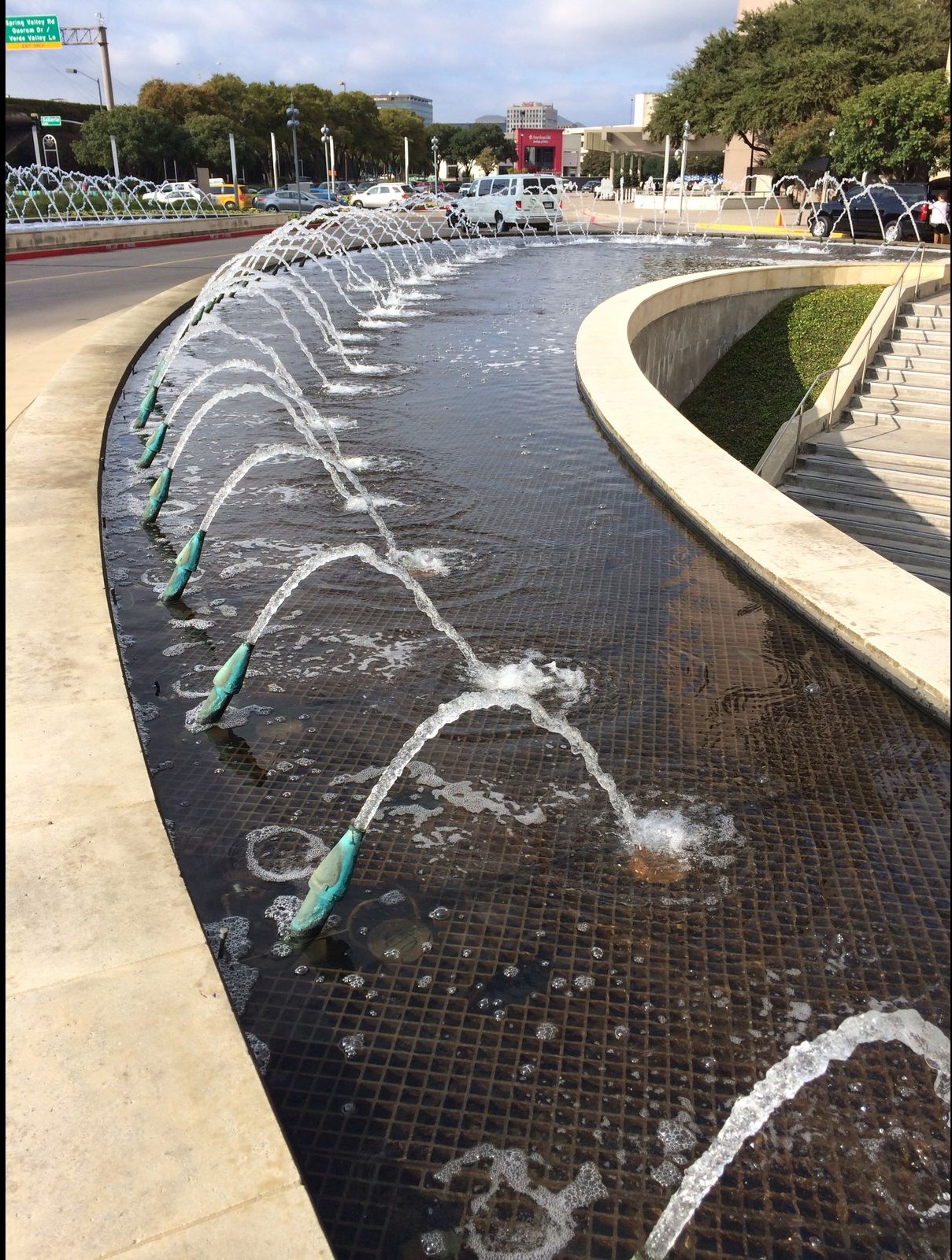
The art of fountain design reaches its zenith when engineering precision meets aesthetic sophistication. The linear arch fountain installation showcased here exemplifies this perfect balance—a meticulously planned water feature that transforms a curved pathway into a kinetic sculpture of water and light. At Ekjan Associates, we recognize such installations as benchmarks of technical excellence in contemporary fountain design.
Anatomy of a Linear Arch Fountain
Linear arch fountains represent one of the most technically demanding yet visually rewarding fountain configurations. This design utilizes a series of individually positioned nozzles arranged along a linear path, each calibrated to project water in graceful parabolic arcs that create a rhythmic, wave-like pattern across the water surface.
The installation depicted demonstrates several hallmark characteristics of professional linear fountain design:
Sequential Nozzle Placement: Each fountain nozzle is positioned at precisely calculated intervals along the basin perimeter. This spacing determines the visual rhythm of the water display—too close and individual arcs blur together; too far and the continuity breaks. Professional installations typically employ 0.5 to 1.5-meter spacing depending on arc height and desired effect.
Controlled Arc Formation: The parabolic water arcs visible in this installation result from carefully engineered nozzle angles and water pressure calibration. Each nozzle is oriented to project water at specific trajectories, creating the signature arching pattern that defines this fountain style.
Integrated Basin Architecture: The curved basin design complements the linear nozzle arrangement, creating visual harmony between the static architectural elements and dynamic water movement. The shallow water depth with visible mesh flooring provides both functional drainage and aesthetic refinement.
Technical Engineering Considerations
Hydraulic System Design
Achieving uniform arc formation across multiple nozzles demands sophisticated hydraulic engineering. Each nozzle must receive identical water pressure and flow rate to maintain pattern consistency. This requires:
Manifold Configuration: A properly designed distribution manifold ensures equal pressure delivery to each nozzle outlet. Professional installations employ balanced manifold designs with strategically sized supply lines that compensate for friction losses across the system length.
Pressure Regulation: Variable conditions such as pump cycling and water level fluctuations can disrupt arc uniformity. High-quality installations incorporate pressure regulation to maintain consistent performance regardless of minor system variations.
Pump Sizing: The pump must deliver sufficient flow to operate all nozzles simultaneously while maintaining adequate pressure for proper arc formation. Calculations must account for total flow requirements, system head losses, and desired operating parameters.
Nozzle Selection and Positioning
The fountain nozzles visible in the installation appear to be adjustable arc jet nozzles—specialized components designed specifically for creating controlled parabolic water paths. Critical factors include:
Angle Adjustment: Quality arc nozzles feature adjustable projection angles, allowing fine-tuning of each arc's trajectory during commissioning. This capability ensures perfect pattern formation despite minor installation variations.
Orifice Sizing: The nozzle orifice diameter determines flow rate and arc characteristics. Larger orifices create more substantial, dramatic arcs; smaller openings produce delicate, refined patterns. The installation shown utilizes moderate sizing for balanced visual impact.
Material Selection: Submersible nozzles must resist corrosion from constant water exposure and potential chemical treatment. Bronze, brass, and marine-grade stainless steel represent standard choices for durability and performance longevity.
Basin and Drainage Engineering
The shallow basin with visible mesh flooring demonstrates thoughtful engineering:
Grating System: The structural mesh provides secure footing while allowing efficient water return to the recirculation system below. This design eliminates standing water hazards while maintaining aesthetic appeal.
Water Depth Management: Shallow water coverage over the grating creates the desired reflective surface while minimizing water volume requirements. This approach enhances sustainability through reduced water usage.
Flow Management: Beneath the visible surface, the basin incorporates collection channels and drainage slopes that direct water toward pump intakes, ensuring efficient recirculation and preventing dead zones.
Aesthetic and Functional Benefits
Urban Integration
Linear arch fountains excel in urban streetscape applications, as evidenced by this installation's context along a pedestrian thoroughfare. The elongated configuration:
- Complements linear architectural elements
- Guides pedestrian movement through space
- Provides visual interest from multiple viewing angles
- Creates cooling effects in warm climates
- Generates pleasant ambient sound that masks traffic noise
Programmable Capabilities
Modern linear fountains often incorporate programmable controls enabling dynamic displays:
- Sequential activation patterns creating wave effects
- Varying arc heights for rhythmic visual interest
- Synchronized operation with lighting systems
- Adjustable timing for water conservation during low-traffic periods
Maintenance Accessibility
The open basin design visible in this installation facilitates straightforward maintenance access. Technicians can easily reach individual nozzles for cleaning, adjustment, or replacement without extensive disassembly—a critical consideration for municipal installations requiring long-term serviceability.
Design Excellence
This linear arch fountain exemplifies design principles that distinguish exceptional installations from ordinary water features. The careful nozzle spacing creates visual rhythm, the shallow water enhances reflectivity while minimizing waste, and the integrated basin architecture unifies all elements into a cohesive composition.
Such installations require more than standard components—they demand technical expertise in hydraulic engineering, aesthetic sensibility in spatial design, and practical understanding of long-term maintenance requirements.
At Ekjan Associates, we provide the specialized components, technical knowledge, and design consultation necessary for creating linear arch fountains that deliver reliable performance and lasting visual impact. From precision nozzles to complete hydraulic systems, our solutions support the creation of fountain installations that transform urban landscapes into engaging public experiences.
Contact us to explore how professional fountain engineering can elevate your next water feature project to this level of technical and aesthetic excellence.