What Is a Pond Ecosystem?
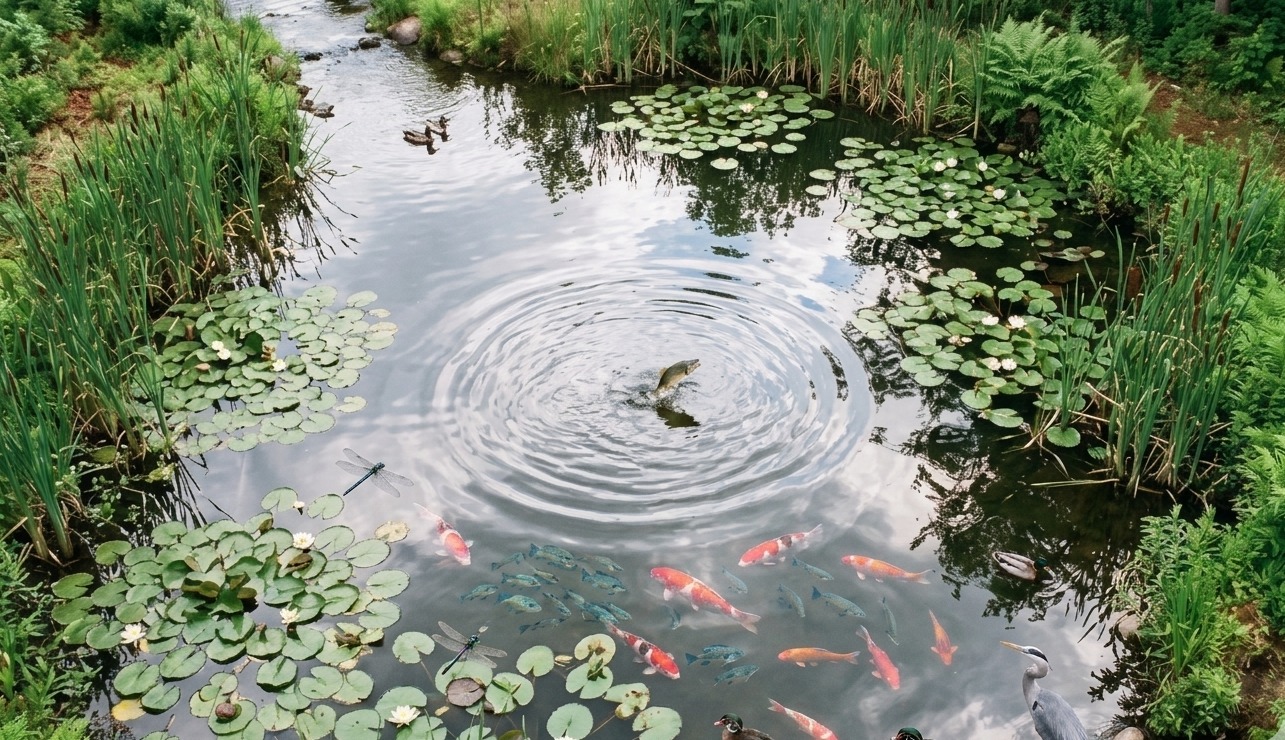
A pond ecosystem is a self-contained freshwater aquatic habitat where living organisms interact with non-living components to form a functioning whole.
The biotic components (the living organisms) include everything from fish and aquatic plants to microscopic zooplankton and the beneficial bacteria invisible to the naked eye. The abiotic components (the non-living components) include water chemistry, dissolved oxygen, sunlight, temperature, minerals, and detritus (decomposing organic material) settled on the bottom.
Healthy freshwater pond ecosystems are among the most biodiverse microhabitats in any landscape. A well-established backyard pond of 500 gallons can support dozens of interacting species: fish, frogs, dragonfly larvae, aquatic insects, algae, bacteria, and plant communities operating across every water depth from the pond margin to the bottom.
Signs of a healthy ecosystem:
- Clear water (or clear enough to see fish at 18+ inches)
- Active fish with normal behavior
- Diverse plant life in appropriate proportions
- Wildlife visiting: frogs, dragonflies, birds
- No foul odors
Signs of an unhealthy ecosystem:
- Algae blooms or persistent green water
- String algae overgrowth on surfaces and pump intakes
- Fish gasping at the surface (oxygen depletion)
- Murky, brown, or sulfur-smelling water
- Fish kills
Understanding pond ecology tells you which problem you're actually looking at and why. Without it, treatment becomes guesswork.