What Is a pH Meter and Why Do You Need One
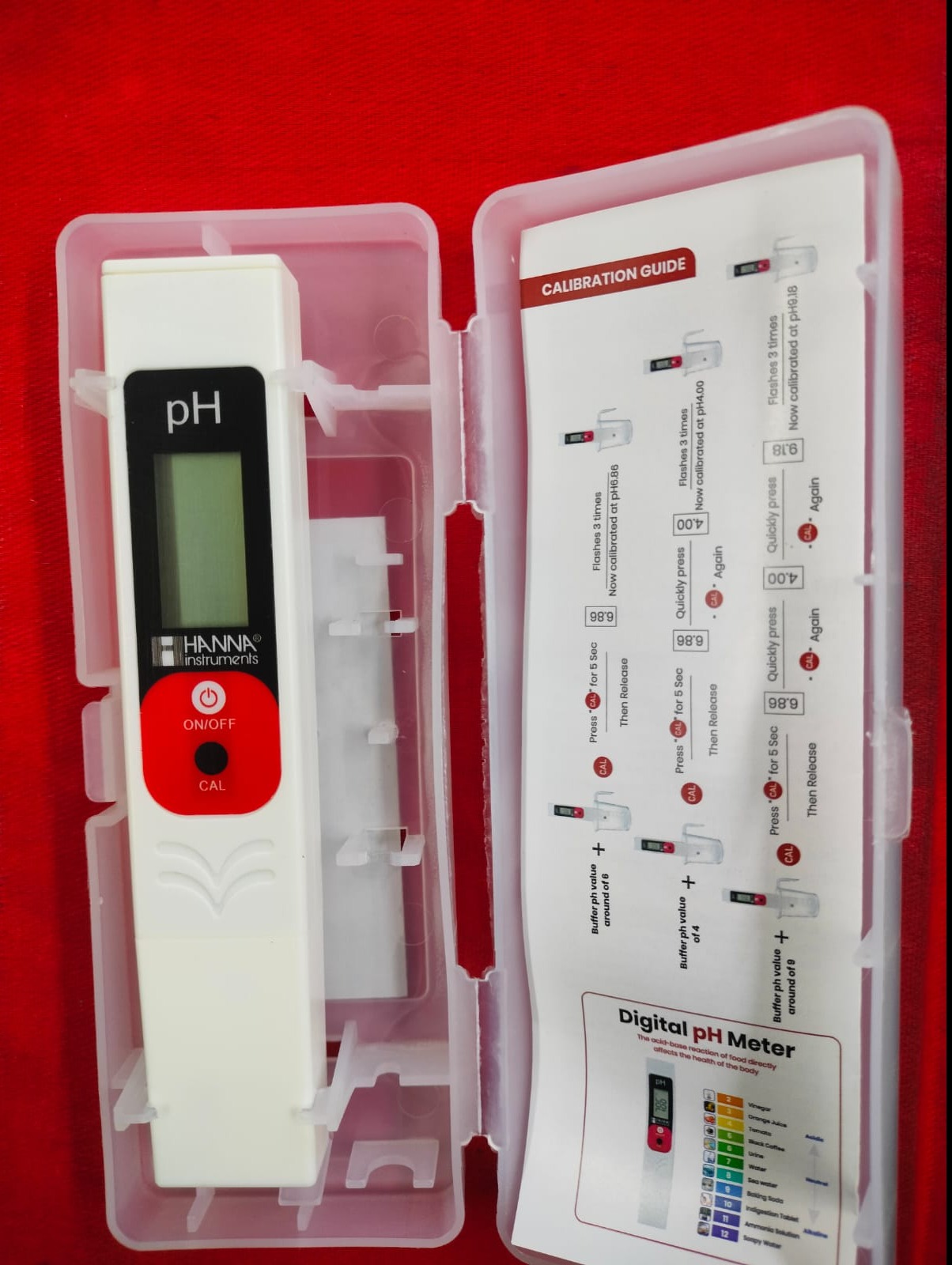
A pH meter is a scientific instrument used to measure the acidity or alkalinity of a liquid. The scale runs from 0 to 14, where 7 is neutral, below 7 is acidic, and above 7 is alkaline. The Hanna Instruments digital pH meter shown here is a compact, pen-style device that gives fast and accurate readings with minimal effort.
How It Works
The meter has a probe that detects the hydrogen ion concentration in a solution. The reading is displayed digitally within seconds. It comes with a calibration guide that helps you set it accurately using buffer solutions at pH 4, 6.86, and 9.18.
Advantages of Using a pH Meter
Accuracy - Unlike paper strips, a digital pH meter gives precise readings up to two decimal places.
Speed - Results appear in seconds, saving time in labs, kitchens, and gardens.
Easy to Use - One button operation makes it beginner friendly.
Portable - The pen size design fits in a pocket or kit bag easily.
Reusable - Unlike single use strips, a pH meter lasts for years with proper care.
Wide Application - Used in hydroponics, aquariums, food testing, drinking water quality checks, and skincare formulation.
Cost Effective - A one time investment that replaces hundreds of test strips.
Final Thoughts
Whether you are a hobbyist, farmer, or health conscious individual, a digital pH meter is a smart and reliable tool. It takes the guesswork out of water and food safety and gives you data you can trust every single time.